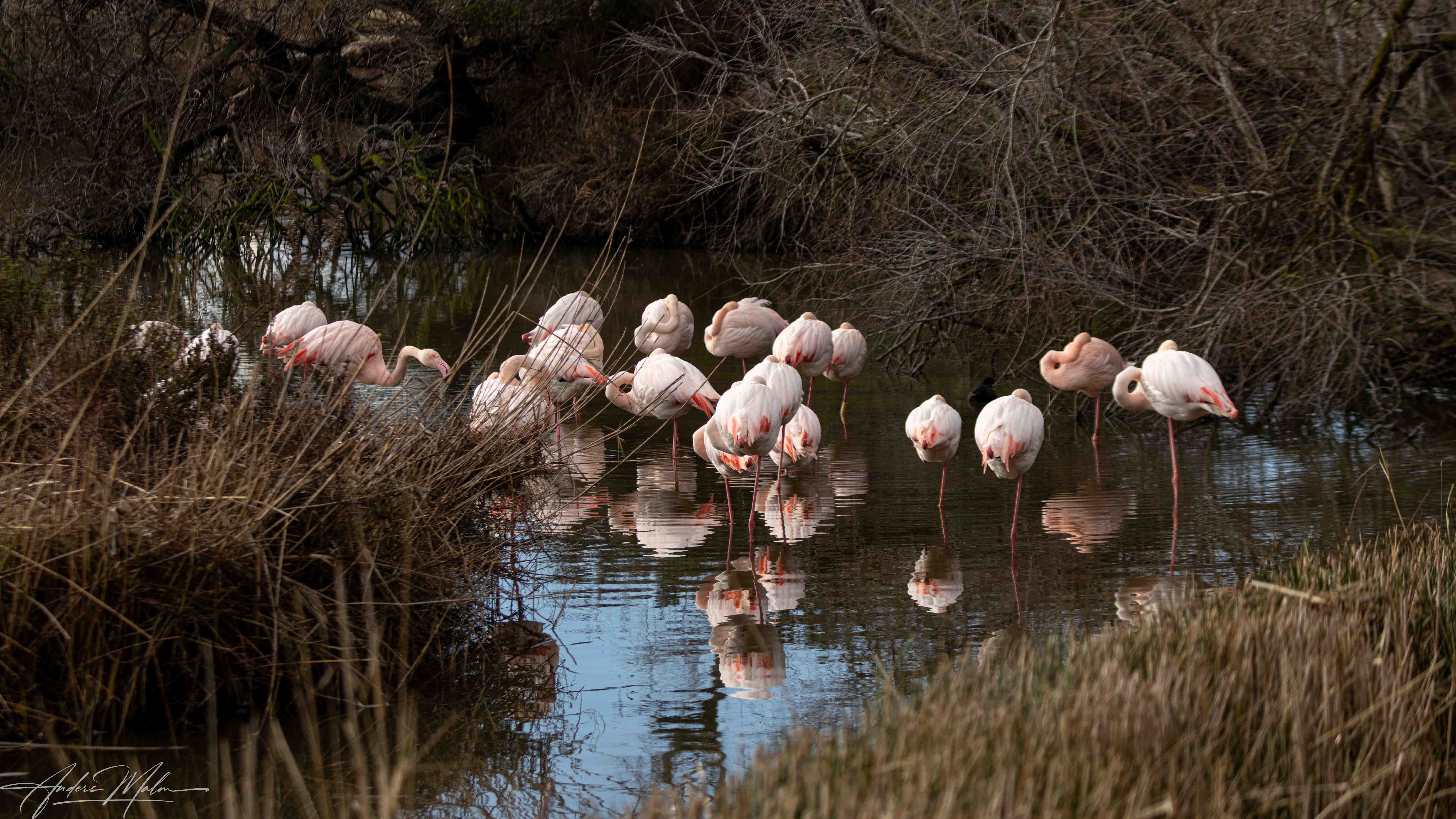
Here are some flashbacks from some of the fantastic photo trips I've been on.
India 2020
In autumn 2019, I was persuaded to join a photography trip to India. In February 2020, we set off, and after a long journey, we landed in Delhi with the world's worst air quality. After one night in a hotel to gather the travel companions who had arrived from various places, we set off. We travelled in a minibus through the chaotic Indian traffic towards Agra, where we visited ”The Red Fort,” an impressive structure that is as much a palace as it is a fort. 
When we've finished looking, we'll head to the hotel to later go and see the Taj Mahal at sunset. The evening will conclude with dinner at the hotel and a drink in the rooftop bar. Early the next morning, we'll head to the Taj Mahal to see it up close in the sunrise. It's an enormous palace complex with the characteristic white marble mausoleum flanked by a mosque on one side and a false replica on the other for symmetry. 
After admiring and photographing, we continue towards the real destination of our journey, Keoladeo National Park in the city of Bharatpur. The journey there passes through countryside, villages and towns. We will be accommodated in a hotel that was once the Maharajah's palace.
Following this are some fantastic days when we have a session in the morning before sunrise and another in the evening until sunset. We each have a cycle rickshaw to take us wherever we wish in the large park. If you see something interesting to photograph, you get off and walk. In the park, besides a variety of birds, there are antelopes, snakes, deer, wild boar, hyenas, jackals, monkeys, and feral cattle.
When we get home, the pandemic breaks out in full force, putting further long trips on hold.
Örebro 2020
In September 2020, we travelled to Örebro to see cranes, among other things. Out at Kvismaren we drove around trying to find where the cranes were located without getting close to them. However, large flocks of flying cranes and geese passed by. 
The morning after, we head to Rynningeviken, where you can very easily photograph out over the water at low angles. It will be a beautiful morning with magical light before and during sunrise.
In the evening, we will once again head to Kvismaren, more precisely to Åslaholmen, a small hill rising above the landscape. Here, we will be photographing flying cranes, geese, and starlings. The evening will conclude with a beautiful sunset followed by the moon. The next morning, it will be Rynningeviken again, and this time with a fantastic mist lying over the water.
A fantastic sunrise colours the sky red-orange while the mist lies clear. Atmospheric and peaceful pictures were captured here.
Knuthöjd Road 2021
In August, we are going to Hällefors to visit Knuthöjdsmossen and photograph black-throated divers.
Nature is absolutely fantastic and this, combined with the call of the red-throated diver, makes the atmosphere magical. We had hoped for a bit of fog but that will have to wait for another time.
Rosenkällasjön 2022
In April, we're heading to Linköping to photograph black-necked grebes and swans. After checking into a really nice, traditional motel, we'll be off to Rosenkällasjön.
The lake is a bit special as it's dammed and remains of the former forest stick up here and there. I don't think I've ever seen so many swans in one place as here.
Early the next morning, we're heading to another small lake nearby, known as a breeding site for great crested grebes. An embankment crosses the lake, and from there, one can find low vantage points close to the birds.
India 2022
In October, we are once again travelling to India to visit Keoladeo National Park. We will arrive in Delhi a day earlier, giving us the opportunity for a city tour. In Old Delhi, we will visit a mosque and take a walk around the market.
As usual, it's incredibly crowded and the traffic is alarming.
The following day, everyone has gathered and we set off for Agra where we will visit the Taj Mahal. Once there, it starts to rain and we end up fleeing the scene like drowned rats. We now continue our journey towards Bharatpur in the worst rainy weather outside of monsoon season since the 1960s. After checking into the hotel and changing our wet clothes, we have a communal dinner. The next day, the rain has stopped and we head to the park.
Dance Trend 2023
In March, we are going to look at cranes at Lake Hornborgasjön, where they gather in their thousands before flying north. Spring has had a slight setback and there has been 10 cm of snow and it is 8 degrees below zero. However, the snow provides for slightly different photography.
There's a magical atmosphere when you step out of the car and hear the almost deafening cacophony from thousands of cranes.
Danube Delta 2023
In May 2023, we're heading off to Romania and the Danube Delta. After a flight with a stressful connection in Vienna, we'll arrive in Bucharest. A long bus journey will take us to Tulcea, the main town in the delta. We'll load our luggage and ourselves into two open boats, and then we'll set off down the river at full speed.
After about an hour, we arrive at Mila 23 where we will be staying for the first part of the trip. At four o'clock the next morning, we set off for our first photo session.
In anticipation of the sunrise, we glide forward in the blue morning light.
Then it comes slowly.
Tysslingen
In April 2024, I'm travelling to Örebro to see and photograph whooper swans resting at Lake Tysslingen. Every year, large numbers of whooper swans gather with various kinds of geese to rest and gain strength before continuing their migration north. I'm going out on Friday evening to scout out the best spots to position myself and will start photographing. The next morning, I'll be there before sunrise to capture the morning light.
The Kilsbergen in the distance provide a perfect backdrop for photographing birds in flight.
Danube Delta 2024
At the end of September 2024, we’re off to the Danube Delta once again. This time, we’re exploring how the nature and wildlife compare in autumn to how they were when we visited in the spring. After an early flight with a tight connection in Amsterdam, we’ll arrive in Bucharest.
After that, there's a few hours' drive to Tulcea, which is the main town of the Romanian part of the delta.
Tulcea is an important port city and lies just a few kilometres from Ukraine. Large ships can travel this far up the delta.

Now it's important to load the boat quickly so that we arrive before darkness falls. 
After a good hour at 25 knots, we arrive at Mila 23, the village where we will be staying this week.
When we wake up the morning after, it's foggy outside and we're eager to get out and see what we can capture on camera. It's still quite dark when we set off in the boat. 
The hunt for birds in the fog begins, first a flock of Pelicans
We are trying to herd them into a channel of magical light but they don't want to cooperate. At least we'll get the opportunity for some aerial shots.
When we give up on the Pelicans, we head into the canal, at the end of which the sun slowly rises, giving us fantastic light.


The weather changed a bit during the week with a bit more wind, so the fantastic morning mist we had on the first morning was only found in sheltered areas. The photography became a little different but definitely not worse.
After five fantastic days of photography with fine weather and pleasant company, it was time to go home. As weather warnings had been issued for Bucharest, we decided it was better to be safe than sorry, so we had an early breakfast and then set off. This time we took a different route to Tulcea, passing through a part of the delta we hadn't visited before. The scenery was a little different, with good photographic opportunities along the way.
India 2025
At the end of February, it's time for a trip to India once again. After a long flight, we arrive in Delhi in the morning and head to the hotel for breakfast. Once everyone is full and satisfied, we head to Old Delhi for a city tour by bus, on foot, and by rickshaw. As a Swede, the sheer number of people, cars, and motorbikes is astonishing. Much of the activity takes place on the pavement or the street. Everywhere there is an organised chaos that still seems to work quite well.


Here we are at an outdoor market where you can buy everything from clothes and tech gadgets to vegetables. 

On the outskirts of the market, poor people live in shacks and tents. We move on to the more permanent market where sales take place from small shops, sometimes with a stall outside. The streets here are so narrow that no cars can get through, but this does not prevent intense traffic with motorcycles, all of whom are honking frantically.

In one section, wedding accessories are sold, and in another, spices. There are also small stalls selling street food; much of it looks exciting and tasty, but it's probably wise not to try it on the first day of the trip.


After a few hours, we'll head to the hotel, but instead of battling through the traffic, we'll try Delhi's newly built metro, which takes us back in 20 minutes.
After a good night's sleep and a hearty hotel breakfast, we head towards Agra where we will visit a stone workshop specialising in making inlays with semi-precious stones, primarily in white marble. In the afternoon, we visit the magnificent Taj Mahal and see it in the evening light.


The Taj Mahal is a tomb mausoleum for a ruler's beloved wife. The building is constructed from white marble decorated with inlays, using the same method as is still employed at the stone cutting workshop. The floral patterns and Kuranic verses surrounding the arch can appear painted, but they are actually stone inlays.

When the sun goes down, we head for our bus but with the complete traffic chaos that reigns, it's impossible to get it out.

So that we don't have to stand around waiting for the bus, the plans are changed and it's decided that we will go and look at the manufacturing of hand-knotted genuine carpets. We squeeze into three tuk-tuks and then off we go at breakneck speed through the city. Breathlessly and with our lives intact, we arrive at the workshop where the carpets are made. They naturally make carpets with traditional patterns, but also with modern designs.
A good while later, the bus has come loose and is ready to pick us up for our onward journey to Bharatpur, where we will spend the week photographing birds and other animals. After a long and intensive day, it feels good to settle into our room and have dinner.
The following morning, we head out into Keoladeo National Park before sunrise. After a few hours of photography, we return to the hotel for breakfast. We then have free time until lunch, which is the perfect time to download your photos and charge your batteries. In the late afternoon, we head back to the park and take photos until sunset, then return for dinner.
This was a bit about the trip itself, to see what I managed to photograph, please click on the link below.
Camargue
In February 2026, we set off for the Camargue, west of Marseille in France. The area lies at the mouth of the Rhône river on the Mediterranean Sea and hosts many lakes, canals, and wetlands. Even during our stopover in Paris, we managed to meet two participants, and upon arrival in Marseille, we met the remaining participants and our guide, Jonathan Stenvall. After a car journey of approximately 1.5 hours, we arrived in Saintes-Maries-de-la-Mer, a small town by the sea. After checking into the hotel and changing into suitable clothing, we headed out for an initial photo session. After a short drive, we walked out onto a spit of land with water on both sides. As it had rained in the preceding days, it was very muddy. We saw some flamingos in the distance and a few other birds.
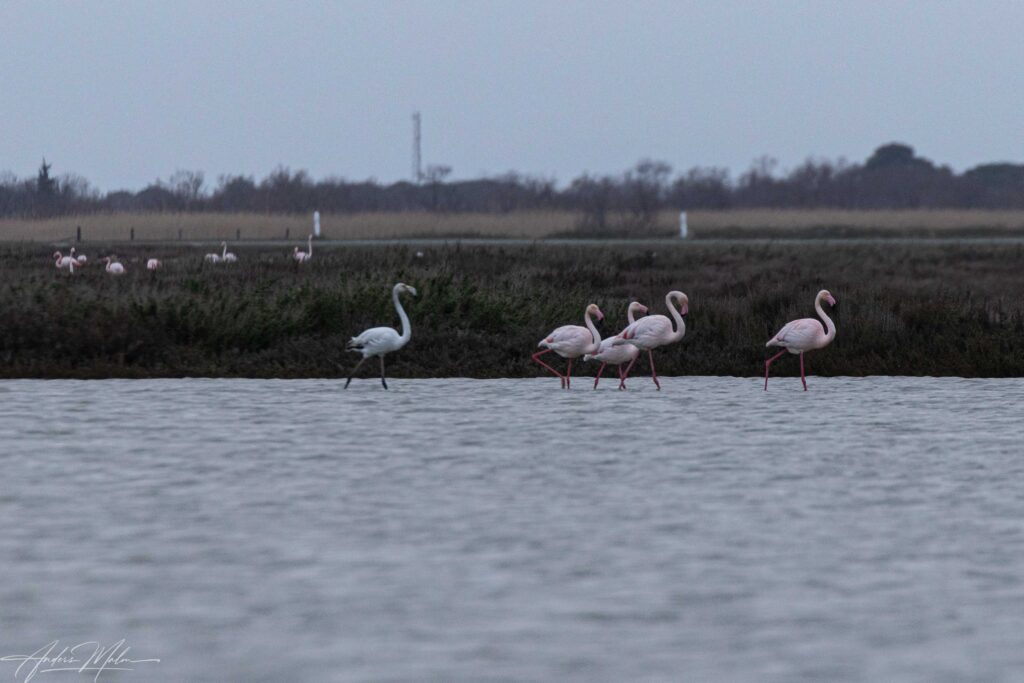
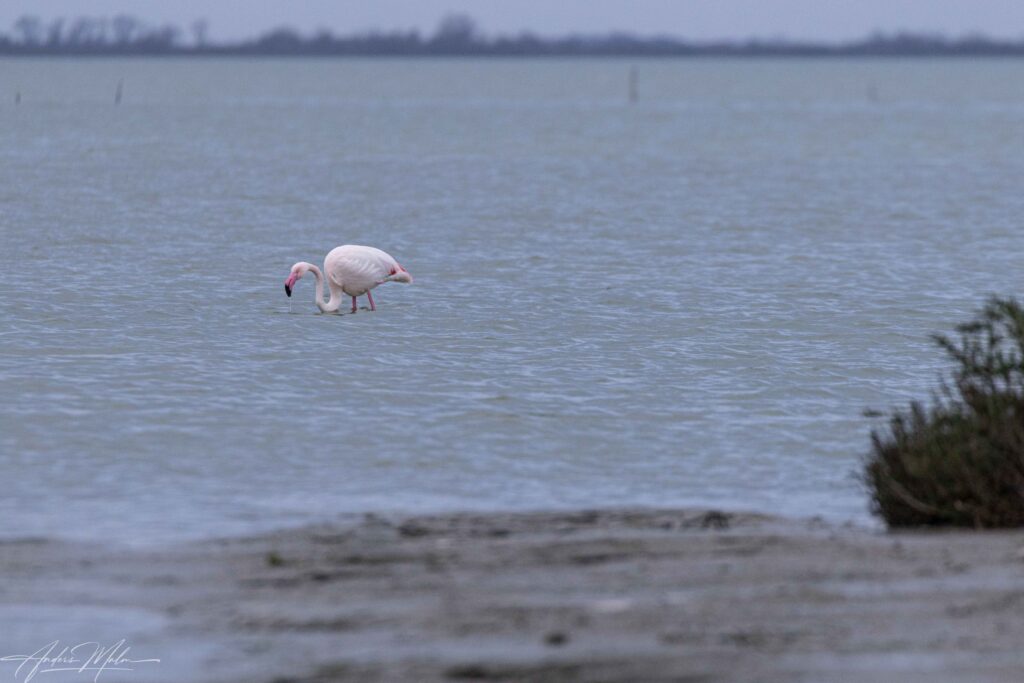
After a couple of hours, we returned to the hotel, cleaned our muddy shoes, and headed out into town for dinner. Early the next morning, before sunrise, we made our way to Les Salines and waited for the sun to rise. Flocks of flamingos gathered here, providing excellent photo opportunities.
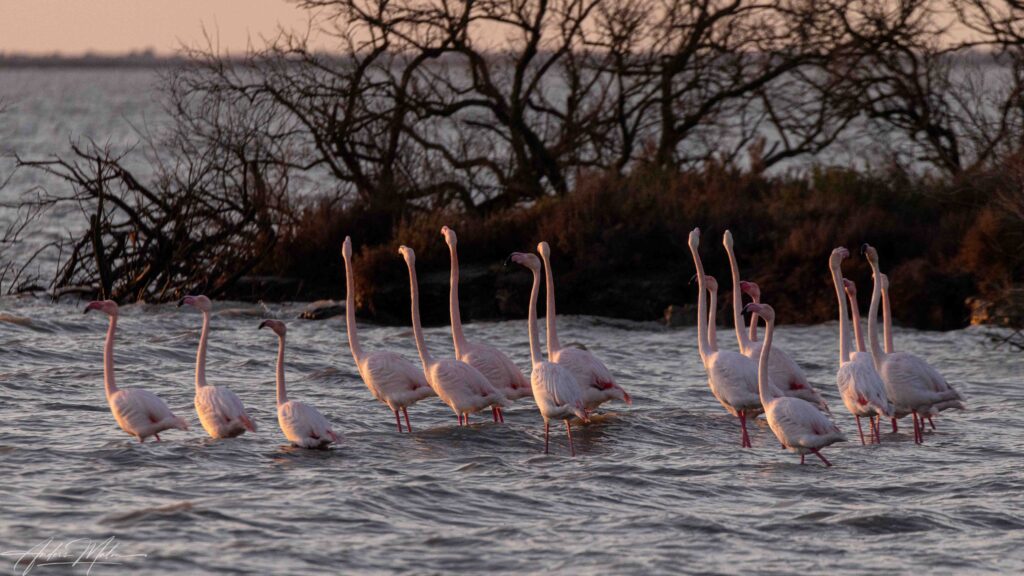
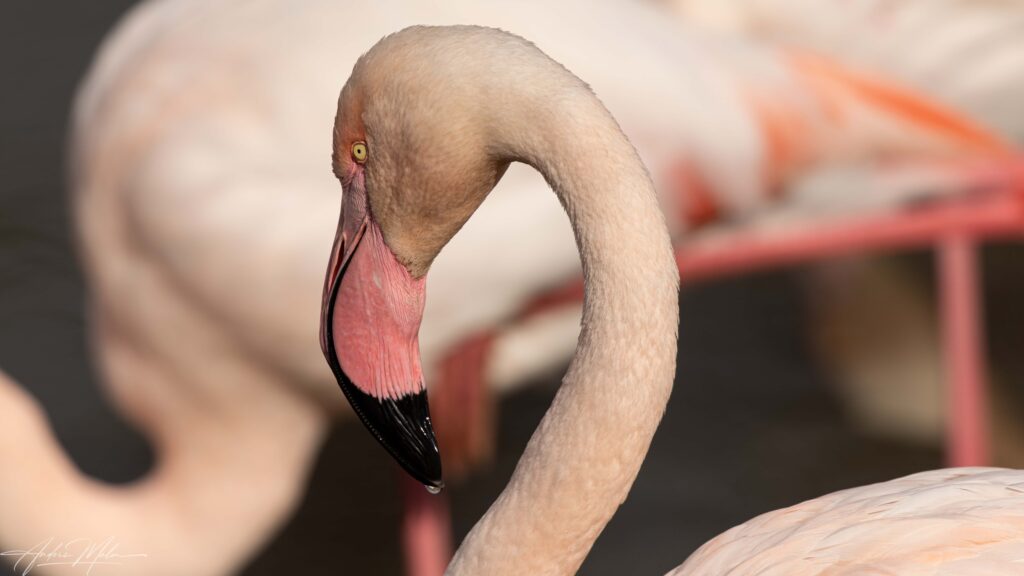
Once the sun had risen we headed back to the hotel for a well-deserved breakfast. A little time to edit photos before lunch. In the afternoon, we went to Pont de Gau, a large bird park with lots of bodies of water and lovely walking paths around them. There were many flamingos here, but also egrets, avocets, glossy ibises and black-winged stilts. The birds are so accustomed to people that you could get as close as a couple of metres.